



One of the most searched questions in the pole fitness space, and one of the least precisely answered: does pole dancing build muscle?
The short answer is yes definitively. But the more useful answer includes the specifics: which muscles, how much, over what timeline, and how this compares to conventional strength training. This guide gives you the detailed answer the community deserves, because "yes it's a great workout" doesn't actually help you understand what your body is doing when you train pole.
The Mechanics: Why Pole Dancing Builds Muscle
Muscle growth (hypertrophy) happens when muscles experience mechanical tension specifically, when they're loaded beyond their current capacity and forced to adapt. The three primary ways to create this load are: lifting weights, performing bodyweight resistance exercises, and moving through resistance (like water or cables).
Pole dancing falls squarely into the bodyweight resistance training category. When you climb a pole, you're lifting your entire bodyweight using your upper body. When you hold a pole sit, your inner thigh is sustaining a static contraction under load. When you control a descent from an inverted position, your muscles are working eccentrically under load - which is one of the most effective mechanisms for muscle development.
The mechanical tension is real. The load is significant. The muscle growth is real.
What makes pole dancing unusual as a strength training stimulus is the complexity and variety of the loading. Unlike a bicep curl, which loads one muscle group through one plane of motion, pole dancing loads multiple muscle groups simultaneously, through multiple planes of motion, in dynamic and isometric combinations that most conventional gym training never replicates.
Which Muscles Does Pole Dancing Work?
Let's be specific about this, because the body map of pole dancing is more comprehensive than most people expect.
Upper Body
Latissimus Dorsi (Lats) - The broadest muscle of the back, the lats are the primary engine of pole climbing. Every time you pull your body upward on the pole, the lats are the dominant muscle doing the work. Pole dancers develop lat strength and visual definition faster than almost any other upper body result.
Biceps and Forearm Flexors - Every grip and pulling movement loads the biceps and the forearm flexor muscles simultaneously. Pole dancers routinely develop visible bicep and forearm definition within the first three to six months of consistent training.
Posterior Deltoids and Rotator Cuff - The rear shoulder muscles and the four-muscle rotator cuff complex work constantly during pole - stabilizing the shoulder joint through the extreme ranges of motion pole requires. This is less about visible muscle bulk and more about the structural strength that makes advanced training safe and possible.
Trapezius and Rhomboids - The mid-back muscles that retract and stabilize the shoulder blades are heavily recruited during inverts, holds, and any position requiring shoulder blade depression. Experienced pole dancers often develop visible upper-back definition from this training.
Triceps - While not the primary engine of most pole moves, the triceps are recruited during push-away movements, certain spin exits, and floor-to-pole transitions.
Core
Rectus Abdominis and Obliques - Visible core muscles that are recruited heavily in inverted positions, where the core must resist spinal extension to maintain body shape. Pole dancers develop functional core strength that's often visible as abdominal definition.
Transverse Abdominis (TVA) - The deep stabilizing core muscle that "braces" the spine during dynamic loading. This muscle is trained extensively in pole through inversions, holds, and the need to stabilize the spine in off-axis positions.
Hip Flexors (Psoas and Iliacus) — Heavily recruited in any move that requires lifting the legs — inverting, maintaining a pike shape, or holding elevated leg positions. Pole dancers develop strong, functional hip flexors as a direct training outcome.
Spinal Erectors and Quadratus Lumborum — The muscles of the lower back that extend and laterally stabilize the spine are recruited during backbend positions, arched holds, and the side-body positions that characterize many advanced pole shapes.
Lower Body
Hip Adductors (Inner Thighs) - The most pole-specific lower body muscle group. The pole sit, the thigh hold, and the inner-leg grip required for climbing all heavily recruit the adductors. Pole dancers consistently develop inner thigh strength that most conventional leg training programs fail to touch.
Glutes - Recruited in floor work, arabesque shapes, and any position requiring hip extension. Less directly loaded than the upper body and core, but definitely involved in the overall movement vocabulary.
Hip Abductors - The outer hip and gluteus medius muscles that stabilize the pelvis and control side-leg movements are recruited in straddle positions, fan kicks, and wide-legged shapes.
The Timeline: When Do You See Results?
The honest timeline for visible muscle development from consistent pole training:
Weeks 1–4: You won't see visible changes yet, but internal adaptations are happening. Neuromuscular efficiency improvements (your nervous system getting better at recruiting the right muscles) account for most of the strength gains in this phase. Soreness in muscles you didn't know you had - particularly the forearm flexors, posterior deltoids, and inner thighs is normal.
Months 2–3: Early visible changes begin to appear for most people, particularly in the arms and upper back. The forearms and biceps tend to respond first because they're loaded so directly in every session. Core definition begins emerging in dancers who train consistently.
Months 4–6: More significant visible development. Upper body changes become undeniable. Core strength that translates to visible definition. Inner thigh development that's noticeable both functionally (grip is stronger) and visually.
6–12 Months: The compound effect of consistent training produces comprehensive body composition changes. Pole dancers at this stage often describe their physique as transformed not necessarily in terms of weight, but in terms of muscle definition, posture, and functional capability.

How Pole Dancing Compares to Traditional Strength Training for Muscle Building
This comparison is worth making honestly rather than defensively:
Where pole training excels over traditional gym training:
-
Trains multiple muscle groups simultaneously in complex, functional patterns
-
Builds muscle in neglected areas (inner thigh, rotator cuff, forearm flexors)
-
Creates functional strength that transfers to other physical activities
-
Sustains long-term engagement (people stick with pole in a way they don't stick with gym programs)
-
Combines strength, cardiovascular fitness, flexibility, and coordination in one practice
Where traditional gym training has advantages:
-
More precise progressive overload (you can increment weight in small, measurable amounts)
-
Ability to isolate and target specific muscle groups
-
More straightforward path to maximum muscular hypertrophy in specific muscle groups
-
Better for someone whose primary goal is maximum muscle size in conventional aesthetic areas
The honest bottom line: If your goal is maximum muscle hypertrophy in the traditional bodybuilding sense, a dedicated weightlifting program will produce faster results in specific muscle groups. If your goal is comprehensive functional strength, a genuinely enjoyable training practice, and the kind of body composition that reflects capability rather than just aesthetics — pole dancing competes with anything.
Many serious pole dancers combine both: pole training as their primary practice, supplemented with targeted gym work to address specific strength gaps. This is arguably the most effective combination.
What to Wear When You're Building Strength on the Pole
This is directly relevant to your muscle-building training: the clothing you wear affects which muscles can do their job. Covered inner thighs mean your adductors can't engage for grip. A loose top means you can't feel your upper back working through the pole contact.
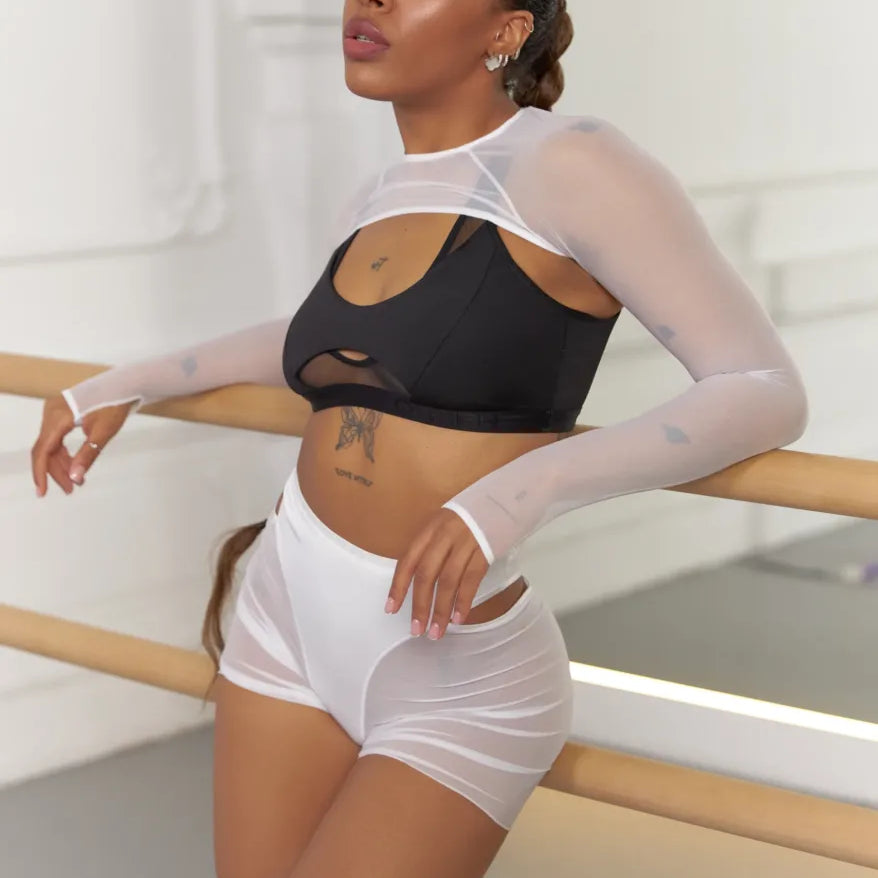
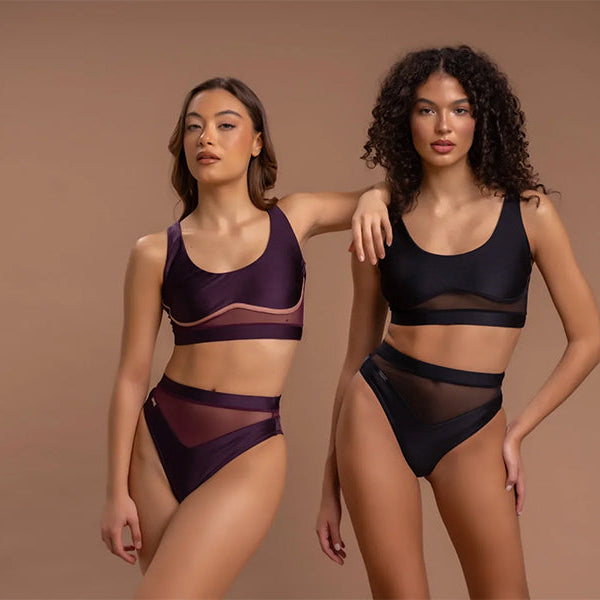
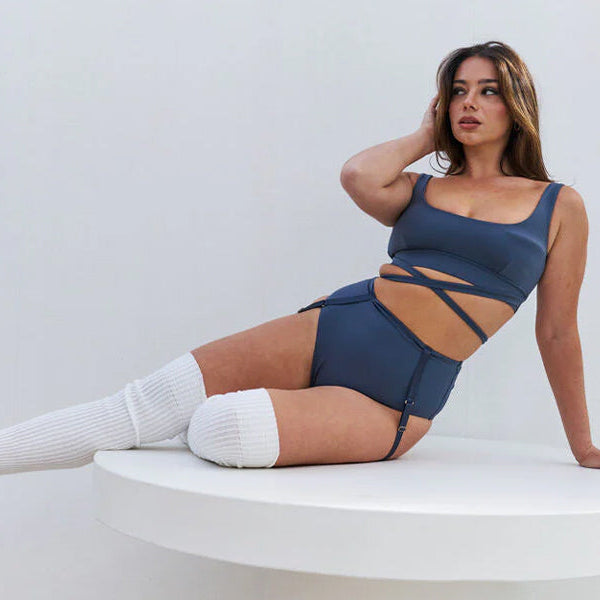
Proper pole dance fitness wear fitted shorts with inner thigh exposure, a secure fitted top - is part of the training environment that lets your muscles work correctly.
Browse quality pole fitness clothing from The Pole Edit. Our Bottoms include training shorts from Lunalae, Rolling Brand, and Nona Perkasa built for the specific demands of pole strength training. All shipped from within the US, no tariffs, easy returns.
The Bottom Line
Pole dancing builds muscle real, functional, visible muscle across the upper body, core, and inner thigh that most people don't develop from conventional gym training. The timeline is comparable to other forms of resistance training, the coverage of muscle groups is genuinely comprehensive, and the strength it builds has functional applications that extend well beyond the pole.
The muscles don't know or care that the resistance is a metal pole rather than a barbell. They respond to the load. Show up consistently, train with intention, and wear the right gear. The results follow.

