


Ask most people to picture pole dancing and they'll picture someone on the pole spinning, climbing, holding a dramatic inverted shape at the top. What they won't picture is the floor.
But ask any experienced pole dancer what separates a great pole performance from a technically competent one, and floor work is almost always part of the answer.
Floor work - the movement vocabulary that happens at and near the ground level during a pole dance performance or training session is one of the most underrated and under-discussed aspects of pole dance as an art form. It's also one of the most physically demanding, most expressive, and most aesthetically impactful components of the discipline.
This guide covers everything: what floor work actually is, why it matters across pole dance styles, what physical skills it develops, and critically - what to wear to train it effectively, because the clothing requirements for floor work are different from pole-specific polewear in ways that matter.
What Is Pole Dance Floor Work?
Floor work in pole dancing refers to any movement that takes place primarily at ground level slides, body waves, spins and turns on the floor, transitions between standing and grounded positions, crawls, rolls, and the expressive full-body movements that connect aerial pole sequences.
Floor work exists in almost every style of pole dancing, but it looks and feels dramatically different across those styles:
In exotic pole: Floor work is central, elaborate, and often the most technically demanding component of a performance. Exotic floor work includes full splits, body wave sequences at ground level, dramatic floor spins, crawl sequences, and flowing transitions between positions. It's performed in heels, which changes the physics and aesthetics of every movement. Exotic floor work is where the most sensual, theatrical elements of the style live.
In artistic and contemporary pole: Floor work serves a narrative or expressive function, connecting the aerial elements of a performance into a coherent story. It might be lyrical and flowing, or sharp and dynamic, depending on the piece's concept.
In pole sport: Floor work appears in transitions and as connecting movement between strength elements. It's less emphasized than in exotic or artistic styles, but well-executed transitions are still scored and contribute to overall artistic impression.
In heels flow: Floor work IS the discipline. Heels flow focuses almost entirely on grounded movement, slides, and floor transitions performed in heels, often without any aerial pole work at all.
Why Floor Work Makes You a Better Pole Dancer
Floor work isn't just filler between the impressive aerial moves. It develops skills and qualities that directly improve everything you do on the pole.
Body Awareness and Proprioception
Floor work requires you to be intimately aware of where every part of your body is in space, and to control it. A well-executed floor spin requires precise coordination of your arms, legs, and torso working in synchronized, sequenced timing. This body awareness develops proprioception - your sense of your body's position that transfers directly to cleaner pole technique.
Transition Quality
The moments between moves - getting from the floor to the pole, from the pole to the floor, from one position to another - are where great performers distinguish themselves from technically skilled ones. Floor work is largely made up of transitions, which means training floor work specifically develops the transition quality that makes a performance look seamless.
Core Strength in Novel Planes
Pole work builds core strength primarily in vertical and inverted orientations. Floor work builds core strength in horizontal planes through rolling, sliding, and controlling your body's weight distribution across the ground. This complementary core development fills gaps that pole work alone doesn't address.
Musical Interpretation
Floor work is often where pole dancers most directly interpret the music - letting body waves, floor transitions, and grounded movement express musical texture in a way that aerial tricks sometimes can't. Training floor work develops your ear-to-body connection, your ability to move with musicality rather than just technically.

The Physical Skills Floor Work Develops
Hip mobility: Floor work in exotic and contemporary styles is highly hip-mobility-dependent. The floor splits, hip circles, and lateral hip movements that characterize sophisticated floor work require and develop hip flexibility across all planes of movement.
Spinal articulation: Body waves, the undulating full-spine movements central to exotic floor work, require segmental spinal articulation: the ability to move your spine sequentially, segment by segment, rather than as a rigid unit. This is a trainable skill that develops progressively with practice.
Lateral weight transfer: Transitioning your bodyweight smoothly across the floor - sliding from one position to another, rolling through transitions requires practiced lateral weight management that builds coordination and functional strength in less-trained movement patterns.
Balance and ground contact: Controlling the precise amount of body surface in contact with the floor, and sliding it rather than dragging it, is a specific skill that takes time to develop. Knee pads help protect the skin during this development process.
Specific Floor Work Elements Worth Training
The Body Wave
The foundational floor work skill, a sequential undulation through the entire spine, typically from the crown of the head through the hips, or vice versa. Start vertical and work toward executing it in a kneeling or floor-level position. This one skill, done well, is more visually impactful than many aerial tricks.
Floor Spins
Using your hands and one foot as contact points, spinning your body around a point on the floor. Requires smooth floor contact, core engagement, and control of rotational momentum. Hard surface floors with a slight slipperiness are the best training environment.
The Slow Descent
A controlled, intentional lowering of your body from standing to a grounded position - making the transition itself the content rather than rushing through it. Teaches weight control, core stability, and the expressive potential of slow movement.
Leg Waves and Extensions
From a floor or kneeling position, moving your legs in controlled sweeps, waves, or extensions that create visual lines extending from your body. These require hip flexibility and the ability to maintain grace while in non-standard orientations.
The Slide
Using smooth fabric-to-floor friction to slide into positions rather than stepping into them. In heels, the platform heel makes floor slides particularly smooth. Key technique: engage your core and keep the movement controlled - slides done well look effortless; uncontrolled ones just look like falling.
What to Wear for Pole Dance Floor Work: The Specific Needs
This is where floor work diverges from aerial pole training in important ways. The clothing requirements are different enough to warrant a dedicated section.
Knee Protection is Priority One
Any floor work involving kneeling, floor spins, or transitions that put pressure on the kneecap requires knee protection. Without it, your knees will develop painful calluses, bruising, and abrasion that limits how freely you can train floor work.
Dedicated pole dance knee pads with a hard or smooth cap for sliding are the standard solution. They allow floor spins and slides to happen smoothly while protecting the skin and underlying tissue.
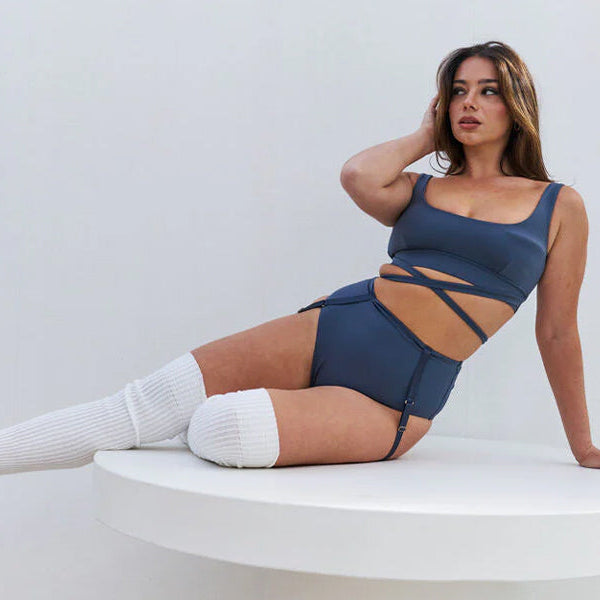
Some polewear brands make integrated knee-pad shorts or thigh-highs with built-in knee coverage - these are particularly popular for floor-work-heavy training sessions.
Fabric That Slides
For floor slides and transition moves, fabric that moves smoothly against the floor surface is important. Rough or high-grip fabrics create friction that makes transitions feel jagged and controlled slides impossible.
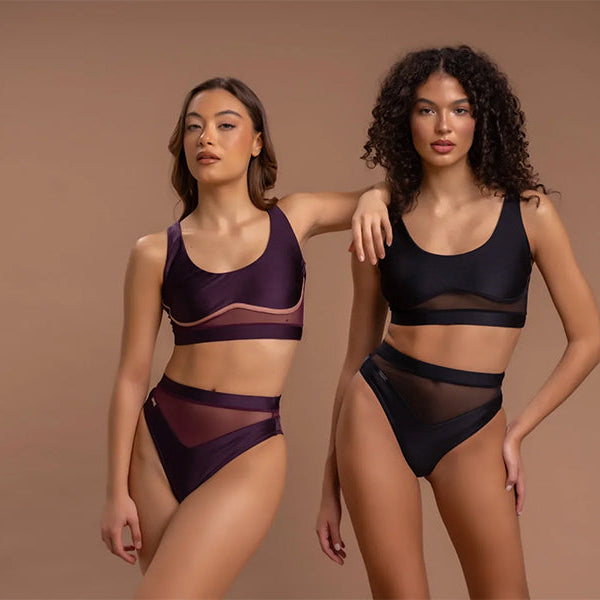
Smooth nylon/spandex blends - the standard polewear fabric work well for floor contact. Velvet and satin-finish fabrics slide particularly smoothly and are popular for performance floor work specifically.
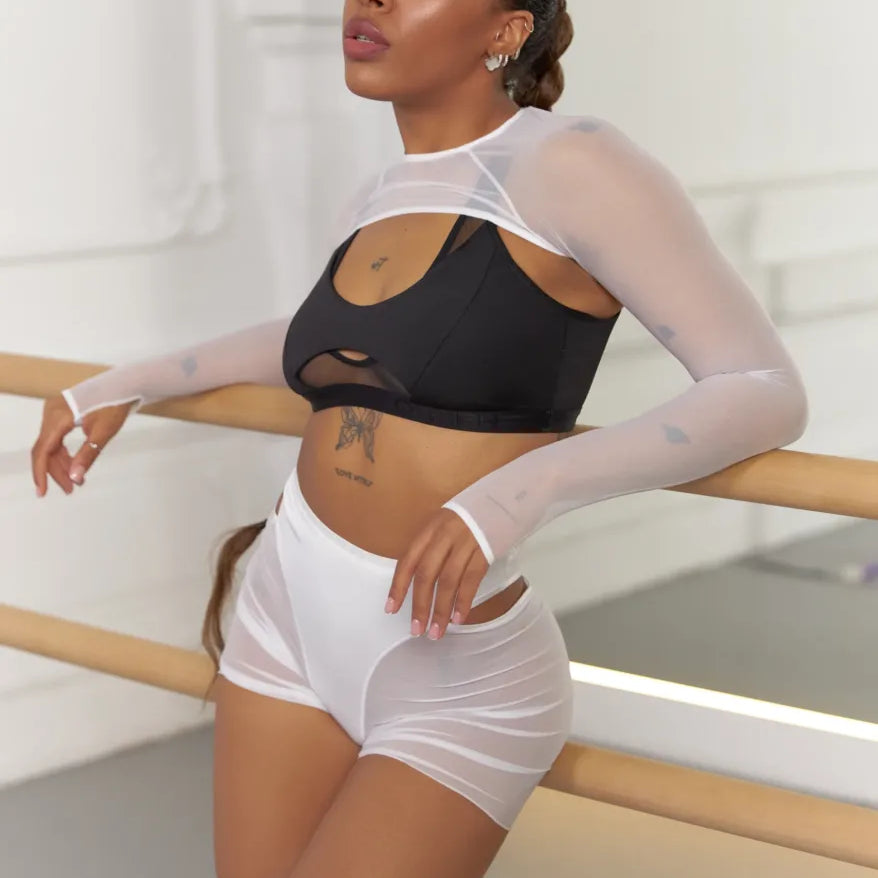
A mesh dance set creates beautiful visual texture while providing smooth floor contact for slides - check our collection for current velvet options.
Coverage for Floor Work Sessions
Floor work typically involves more total body surface touching the ground than aerial pole work which means more coverage can actually be comfortable, unlike aerial work where more skin means more grip. Many dancers who train floor work heavily wear slightly more coverage: mid-thigh shorts rather than hot pants, or a bodysuit that protects more skin from repeated floor contact.
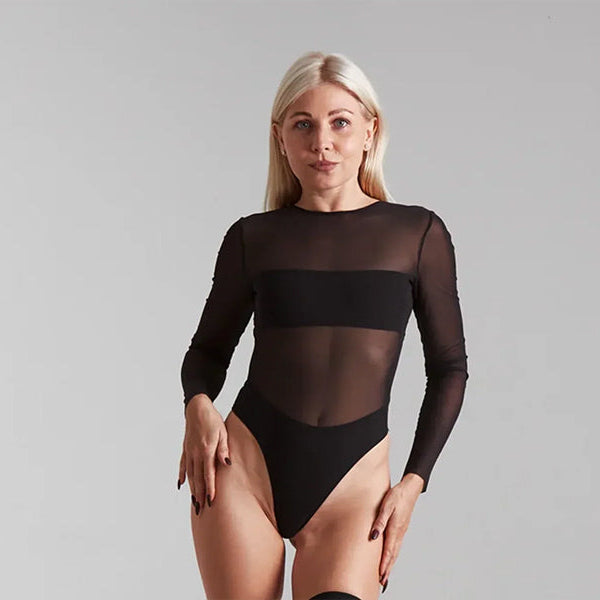
The Bodysuit Temptation in Black Matte ($78) is a floor work favorite - the smooth matte surface slides beautifully against studio floors, the bodysuit keeps everything in place through every floor transition, and the matte black is a classic performance aesthetic.
For matching sets that work for floor-work-intensive sessions, browse our Bottoms and Tops collections Lunalae and Rolling Brand both make pieces with fabric properties that translate well to floor work.
Heel Considerations
If you train exotic pole or heels flow, you'll be doing floor work in heels which changes everything about the feel and execution. The heel's platform creates a specific floor contact geometry that you train your body to use. In heels, floor slides often feel more natural because the smooth platform sole reduces friction.
Heels-specific floor work training requires a harder studio floor surface than padded training mats - smooth wooden or vinyl floors are optimal.
Integrating Floor Work Into Your Training Practice
If you're not already training floor work deliberately, here's a simple starting point:
Dedicate 10–15 minutes per session to floor work specifically. Not as a warm-up filler, but as focused training with a specific skill focus. Spend a week on body waves. Spend a week on floor spins. Give each element the same focused attention you'd give a new aerial move.
Record yourself. Floor work filmed from the side or at a slight elevation reveals the flow and quality of your body wave, the smoothness of your transitions, and the control of your weight distribution in ways you can't see without the camera.
Let music lead. Floor work responds to music in a different way than technical pole work. Put on the track you're working to and let the music suggest what the floor work does. This is the practice that develops genuine musicality.
Shop Polewear for Floor Work at The Pole Edit
Build a floor work wardrobe that performs as well as it looks - smooth fabrics, secure fits, and pieces designed for the full range of pole movement including the ground level. All shipped from within the United States, no tariffs, easy returns.
Browse the full collection at thepoleedit.com/collections/all. Founded by a pole dancer who knows the floor is just as important as the air.

