


Ask any pole dancer why they kept coming back after the first class, and the answer is almost never purely physical. Stronger arms, yes. Better core, absolutely. But the reason most pole dancers become lifelong pole dancers has more to do with how the practice makes them feel about themselves, their bodies, their capabilities than with any measurable fitness metric.
The pole community has been talking about these psychological effects informally for years. Therapists who pole dance have written about it. Instructors who've watched transformation happen in their studios have documented it. And now, slowly, research is beginning to confirm what the community already knew.
This is a real, honest look at the mental health dimension of pole dancing, what it does to your relationship with your body, how it builds psychological resilience, and why the studio environment specifically creates effects that solo exercise doesn't replicate.
The Mind-Body Connection That Pole Dancing Builds
Most exercise is relationship-agnostic about your body. You use your body as a vehicle, track its outputs, and evaluate it against external benchmarks: faster, heavier, thinner, stronger. The body is an instrument being optimized.
Pole dancing asks something different. It asks you to be in your body, to be present to what your body is doing and feeling, to move expressively rather than just efficiently. This isn't language or metaphor, it's the functional requirement of the practice. When you're learning a new combination on the pole, you have to be entirely present to the physical experience. There's no space for your mind to wander to your grocery list or the work email you haven't sent.
This present-moment engagement is essentially what mindfulness practice achieves through deliberate attention training. Pole dancing achieves it as a byproduct of learning a physically demanding skill. The community has been experiencing this for years without always having the vocabulary for it. Researchers studying mind-body exercise now have the vocabulary, and the effects look similar: reduced rumination, reduced anxiety, improved emotional regulation.
Body Image: The Transformation the Community Talks About Most
If there is one psychological effect of pole dancing that comes up more consistently than any other in community conversations, it's the shift in body image. And it's worth unpacking precisely what's happening, because it's more nuanced than "pole makes you love your body."
The traditional fitness industry presents a simple narrative: exercise to change your body, love your body once it has changed. Pole dancing inverts this. The practice asks you to use your body with all its current capabilities and limitations as a vehicle for expression and strength. The evaluation criterion shifts from what does my body look like to what can my body do.
When a dancer lands their first invert when they feel themselves go upside down and hold there using nothing but strength they generate the internal evidence of capability is undeniable and immediate. It doesn't depend on a number on a scale or a measurement or a comparison to someone else's body. It's you, the pole, and what you just did.
This experience, repeated regularly, genuinely changes the lens through which many dancers see themselves. Research on exercise and body image consistently shows that physical activity that's intrinsically motivated (done for the experience itself) produces better body image outcomes than activity that's extrinsically motivated (done to look a certain way). Pole dancing is almost always intrinsically motivated. You keep coming back because it feels good and you're learning something, not because you're trying to change your appearance.

Self-Efficacy: The Confidence That Transfers
Self-efficacy: the belief in your own ability to achieve specific outcomes is one of the most robust predictors of wellbeing and resilience across life domains. And pole dancing builds it in a specific, compounding way.
Every time you attempt something you can't do yet, fail, adjust, and eventually succeed, you're building evidence of your own capacity. The climb you couldn't do in week two becomes your warm-up in month three. The invert that terrified you at month two becomes a comfortable transition at month five. Each of these transitions creates internal evidence: I can do hard things that initially felt impossible.
This isn't a trivial effect. Psychologists who study behavior change have consistently found that success experiences especially in novel, challenging domains are the most powerful source of self-efficacy development. Pole dancing provides these success experiences regularly and visibly.
The transfer effect is what the community consistently notices: pole confidence bleeds into other domains. Dancers report feeling differently at work, in social situations, in physical spaces. The direct mechanism is the accumulated evidence of capability your brain generalizes "I can do things I thought I couldn't" beyond the studio.
The Community Dimension: Why It's Not Just Exercise
Solo exercise has real mental health benefits that are well-established. But the social dimension of studio-based pole dancing produces psychological effects that solo training doesn't replicate.
Belonging and identity. The pole community has a strong shared identity and culture. Being part of it, having "pole dancer" as part of how you understand yourself provides the psychological benefit of group belonging that social psychology consistently identifies as fundamental to wellbeing.
Witnessed progress. When your studio community witnesses your first climb, your first invert, your first showcase performance, the validation is real and specific. This is different from posting a progress clip online and receiving likes. It's human beings who know you, who have trained alongside you, celebrating your specific accomplishment.
Non-comparative support. The pole community has a remarkably low level of the social comparison dynamic that characterizes many fitness environments. Because pole skills are so diverse and multi-dimensional, there's rarely a simple ranking of "better" and "worse" different dancers excel in different ways, at different stages, in different styles. This makes the studio environment psychologically safe in ways that competitive fitness spaces often aren't.
Safe emotional expression. Pole dancing, particularly in its more expressive styles, provides a sanctioned, structured space for emotional expression through movement. Many dancers describe performing even in a casual studio context as emotionally cathartic in ways they didn't anticipate.
Pole Dancing and Specific Mental Health Challenges
Anxiety: The present-moment physical engagement that pole requires has a natural anxiety-interrupting effect. It's very difficult to catastrophize about a future scenario while simultaneously trying to stay upside down on a metal pole. Many dancers with anxiety report that the pole is one of the few spaces where their mind genuinely quiets.
Depression: The community connection, the skill-based achievement experiences, the physical exertion and endorphin release, and the identity shift all work together to make pole dancing an unusually multi-dimensional intervention for the low mood and disconnection that characterize depression. Multiple instructors and community members have described pole dancing as part of what pulled them out of or helped them manage depressive episodes.
Body dysmorphia and disordered eating history: The relationship between the pole community and body image is complicated enough to acknowledge carefully. The community's celebration of diverse bodies and functional-rather-than-aesthetic evaluation of movement is genuinely healing for many people with difficult body image histories. But the performance and costume context of advanced pole can also trigger comparison in vulnerable individuals. Community culture matters enormously here a good studio actively works to maintain a non-comparative, non-diet-culture environment.
Showing Up for Your Mental Health, Dressed for Your Practice
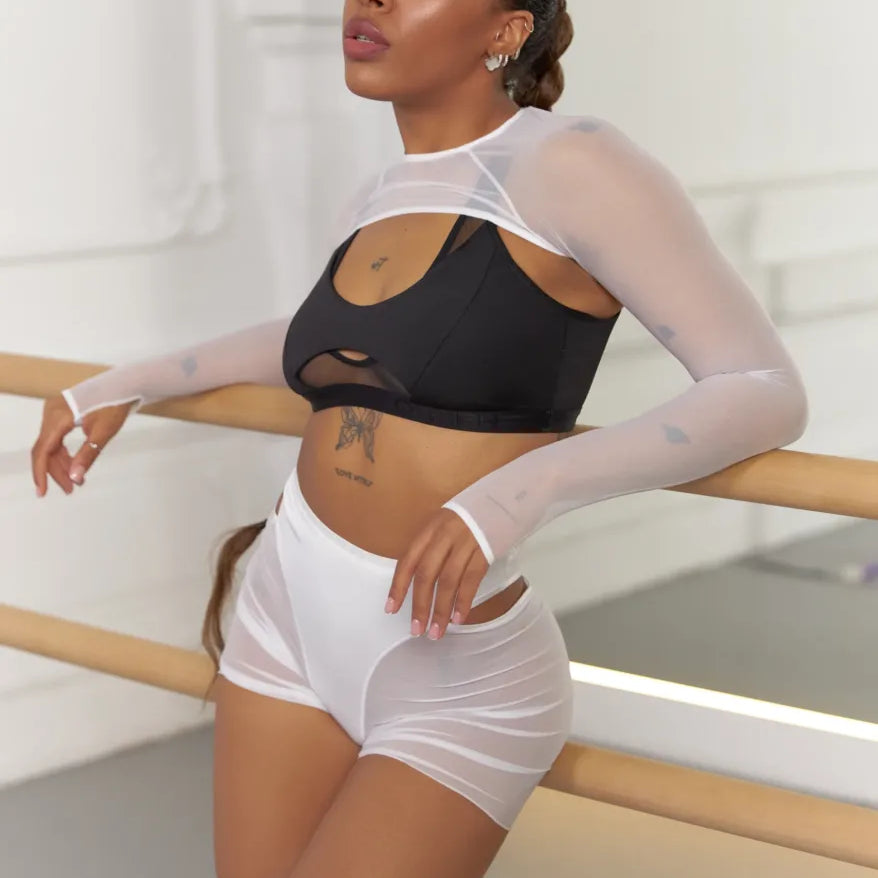
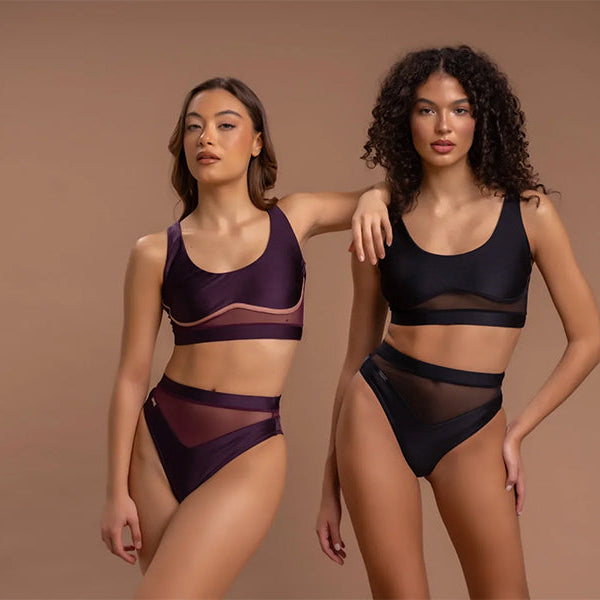
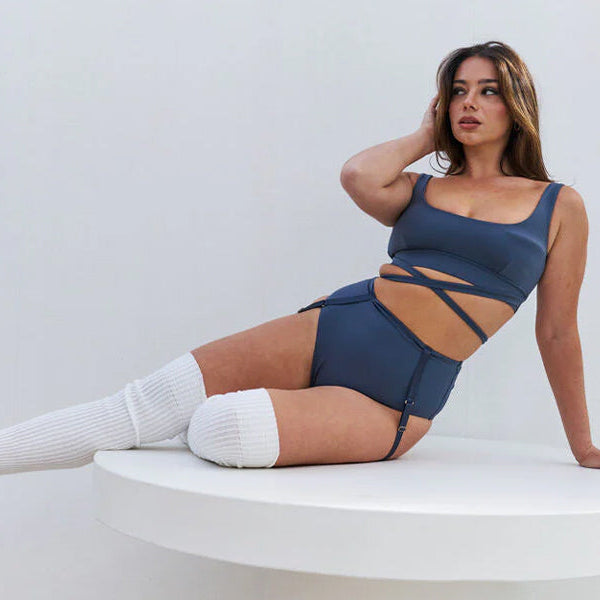
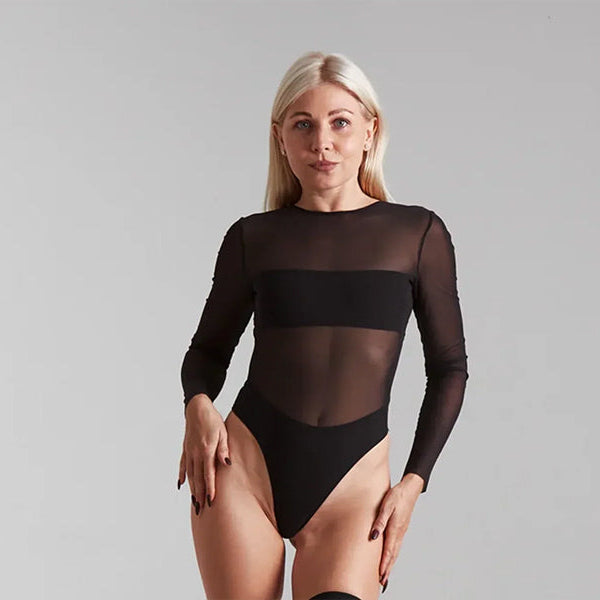
The act of putting on your pole dance clothing before a session is itself a ritual that primes the psychological state you bring to training. Pole dancers consistently describe the outfit change as a transitional moment stepping out of the day's stress and into a space that belongs entirely to them.
This is one of the under-discussed reasons why quality pole dance wear matters for more than just performance. The clothing becomes associated with a psychological state presence, capability, self-expression that the act of putting it on begins to activate.
Browse our full collection at The Pole Edit clothing that supports your training and the mental shift that comes with it. Pieces from Lunalae, Rolling Brand, Paradise Chick, and Harna, all shipped from the US with no tariffs and easy returns.
The studio is waiting. Your mental health will thank you for going.

