





Let's address the question directly, because it gets asked constantly and deserves a real answer instead of the vague "it's a great workout!" response that fills most fitness content.
Does pole dancing help with weight loss and body transformation?
Yes - with important context that most guides skip over. The "yes" is real, the results are real, and the community has years of documented transformation stories to back it up. But how it works, what kind of transformation to expect, and why the results look different from conventional gym training are all worth understanding before you start.
This is the honest, detailed answer.
What Type of Exercise Is Pole Dancing, Exactly?
Understanding what pole dancing does to your body starts with understanding what category of exercise it actually is because it's genuinely unusual.
Pole dancing is resistance training at its core. Every climb, hold, invert, and dismount involves moving your own bodyweight against gravity through extended ranges of motion. When you hold yourself on the pole with your inner thighs, that's a sustained isometric contraction. When you climb, that's a concentric and eccentric load cycle through your upper body and core. The resistance training component of pole dancing is more demanding than most casual gym routines.
It's also cardiovascular training. A dynamic pole session, especially one that moves continuously through transitions and floor work, keeps your heart rate elevated in the moderate-to-vigorous zone. This isn't the endurance cardio of a 10K run, but it's genuine cardiovascular work.
And it's flexibility and mobility training. The range of motion demands of pole dancing - hip flexor stretch through climbing, shoulder mobility through overhead holds, hamstring and hip opening through splits and oversplits - create progressive flexibility development as part of the training itself, not as a separate stretch session.
This combination is the reason pole dancing produces a specific kind of physical change that doesn't look exactly like what you get from the gym, running, or yoga alone.
Calories Burned in Pole Dancing: The Real Numbers
Calorie burn in pole dancing varies widely depending on your training intensity, your body weight, your experience level, and what style you're training in. But here's a realistic range:
Beginner sessions (learning spins, basic moves, lots of rest between attempts): 200–350 calories per hour. This is comparable to a moderate yoga class or casual cycling.
Intermediate sessions (climbing, inverts, conditioning work, floor combinations): 350–500 calories per hour. This range compares to a circuit training class or moderate-intensity aerobics.
Advanced and performance training (dynamic combinations, drops, conditioning circuits, choreography run-throughs): 500–700+ calories per hour. Comparable to vigorous interval training.
The trajectory matters: as your fitness and skill improve, your training intensity naturally increases, which means your calorie expenditure increases even if you're spending the same amount of time training. A beginner doing 40 minutes of pole work burns very differently from an intermediate dancer doing 40 minutes of pole work.

The Honest Timeline: What Pole Training Does to Your Body
Weeks 1-4: Surprise Soreness and First Strength Signs
Your first month of consistent pole training produces DOMS (delayed onset muscle soreness) in muscles you didn't know you had. The flexors of your hands and forearms. The deep shoulder stabilizers. The muscles of your inner thigh that the pole contacts.
This isn't the soreness of a gym machine workout - it's the soreness of using your body as the weight in a genuinely demanding way. Most beginners are surprised by how challenging it is from a pure strength standpoint.
At this stage, visible transformation is minimal but internal changes are significant. Your nervous system is learning new movement patterns, your cardiovascular system is adapting to the training demands, and the muscle fibers being recruited through climbing and grip work are receiving new stimulus.
What most people notice: Improved grip strength, sore hands, general upper body fatigue, and an appetite shift consistent with increased activity.
Months 2–3: First Visible Changes
This is where the community typically starts posting transformation content, and for good reason. Two to three months of consistent pole training (two or more times per week) produces:
Upper body change: The shoulders, upper back, and arms respond quickly to the climbing and grip demands. Dancers who came in with very limited upper body strength often see their first noticeable arm and back definition in this window.
Core change: The sustained inversion work and pole holds build core definition in a way that crunches and planks simply don't replicate because pole core work is functional, loaded, and occurs in positions that recruit the deep stabilizing muscles alongside the visible surface muscles.
Posture change: This one surprises people. Pole dancing builds the posterior chain (upper back, rear deltoids, mid-back) significantly, which directly improves posture. Many pole dancers in this phase start noticing that they're standing differently - more open through the chest, more upright, with better shoulder position.
Months 4–6: The Compound Effect
At this stage, the changes compound. Your training intensity is higher than it was at month one. Your skill level allows more dynamic, calorie-intensive training. Your body has adapted to the basic demands and is now responding to increasingly challenging stimulus.
Weight changes: If weight loss is a goal, this is the phase where consistent changes typically show particularly in combination with supportive nutrition. The calorie expenditure from regular intermediate-level pole training is meaningful, and the muscle mass being built increases baseline metabolic rate.
Composition change: Even when the scale doesn't move dramatically, body composition often shifts noticeably. The combination of muscle gain and fat loss produces visual changes that feel significant even when the numbers are modest. Pole dancers frequently describe looking and feeling physically different without understanding why the scale hasn't changed as much as expected and the answer is that muscle is denser than fat.
The second skin effect: By this stage, most pole dancers have developed enough grip callus on their hands, some skin toughening on their inner thigh, and enough body awareness that their movements start feeling genuinely athletic rather than effortful and awkward. The training stops feeling like exercise and starts feeling like practice.
Months 6–12 and Beyond: Long-Term Transformation
Pole dancers who train consistently through the first year typically undergo the most significant physical transformation in this second half of the year. The foundations are built. Skill develops faster. Training intensity increases. The physical changes accelerate.
By 12 months of consistent training, most pole dancers report:
-
Significant functional upper body and core strength
-
Measurable flexibility improvements
-
Improved cardiovascular fitness
-
Body composition changes consistent with regular resistance and cardio training
-
Posture that has changed noticeably
And importantly: they've found a form of exercise they consistently show up for — which is, ultimately, the factor that determines long-term fitness outcomes more than any other variable.
Why Pole Works When Other Exercise Doesn't Stick
This is worth dwelling on, because it's not a trivial point.
The skill acquisition factor. Most conventional exercise is not skill-based - you just do the thing. Pole dancing has a continuous learning curve that keeps engagement high indefinitely. There's always the next move to learn, the next combination to master, the next level to reach. This keeps motivation intrinsic and constant in a way that "go for a run three times this week" simply doesn't.
The community factor. The studio environment creates accountability and belonging that solo gym training or home workouts rarely replicate. When people know you at your studio and celebrate your progress, showing up becomes something different than dragging yourself to the treadmill.
The identity shift. People who pole dance consistently start calling themselves pole dancers. That identity shift from "someone who exercises" to "a pole dancer" — changes the relationship with the practice in ways that affect adherence dramatically.
What to Wear to Train Effectively
This matters for transformation goals specifically because your clothing directly affects training effectiveness. Covered grip zones mean you can't execute the moves that build the strength that produces the physical results.
As your training gets more intense and your moves more complex, your clothing needs to evolve with you:
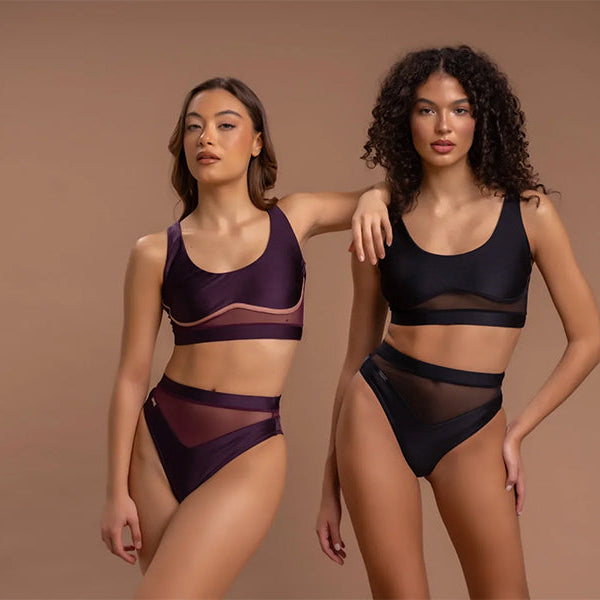
For conditioning and strength sessions: Shorts with full inner thigh exposure, fitted sports bra or crop top, bare feet. No distractions, maximum grip.
For flow and choreography sessions: Slightly more expressive choices are fine matching sets, statement pieces because these sessions are about movement quality over maximum grip contact.
Browse our full pole dance fitness clothing collection — everything built for real training, shipped from the US, founded by a pole dancer who understood that the right clothing is part of the training, not separate from it. Our Bottoms and Tops collections include options from Lunalae, Rolling Brand, and Harna for every training style and intensity level.
No tariffs. Easy returns. Fast US shipping. Your transformation starts with showing up - we'll make sure you're dressed for it.

