


If you've been training in a studio or researching home poles, you've already encountered the question: static or spinning?
Most poles sold today are dual-mode - they can run in either mode depending on how you set them. But understanding why you'd choose one over the other, when each mode serves your training, and how the difference actually feels in practice is something most guides gloss over with a single paragraph.
This is the full breakdown. Static pole vs spinning pole - how each one works mechanically, what skills each develops, how competition uses both, and the small but real ways your pole type affects the clothing and grip decisions you make.
The Mechanical Difference
Static pole: The pole is fixed. It does not move. When you spin on a static pole, you create 100% of the rotational momentum through your own body mechanics - your push-off from the floor, your leg and arm positioning, and how you control your body shape during the rotation.
Spinning pole: The outer sleeve of the pole rotates freely on a bearing system around a fixed inner core. Once you initiate rotation, the pole continues spinning with you - adding momentum that your body alone didn't generate.
That mechanical difference sounds simple. The practical difference in how training feels is significant.
What Training on a Static Pole Develops
Body Awareness and Momentum Control
On a static pole, you are entirely responsible for every rotation. If your spin stops too early - that's your body position. If it spins too fast - that's your body position. If you wobble mid-spin - that's your body position.
This feedback loop is the single most powerful training tool in pole dancing. Static pole makes you deeply aware of how your body shape, momentum, and center of gravity affect your movement quality. Dancers who develop their foundations on static pole tend to have cleaner, more controlled technique across the board because they built that control without any assist.
Strength Demands
Static pole requires more raw strength to execute the same moves that a spinning pole makes more accessible. Climbing, inverts, and strength holds are all "honest" on a static pole - the pole isn't giving you anything. What you put in is exactly what you get back.
This is why most conditioning and strength-focused training defaults to static. You know exactly what your body is doing.
Technique Refinement
Because the pole doesn't compensate for poor positioning, static training reveals technique flaws with clarity. A spin that looks passable on spinning pole often reveals a fundamental issue when tried on static. Many advanced dancers use static training specifically to diagnose and fix technique problems.
Competition: Static Category
Pole sport competitions typically run both a static and a spinning category. The static category rewards the clearest demonstration of strength, control, and technical precision because there's no spinning pole assist masking any of it. Competitors who excel in static have typically done enormous amounts of static-focused foundational training.
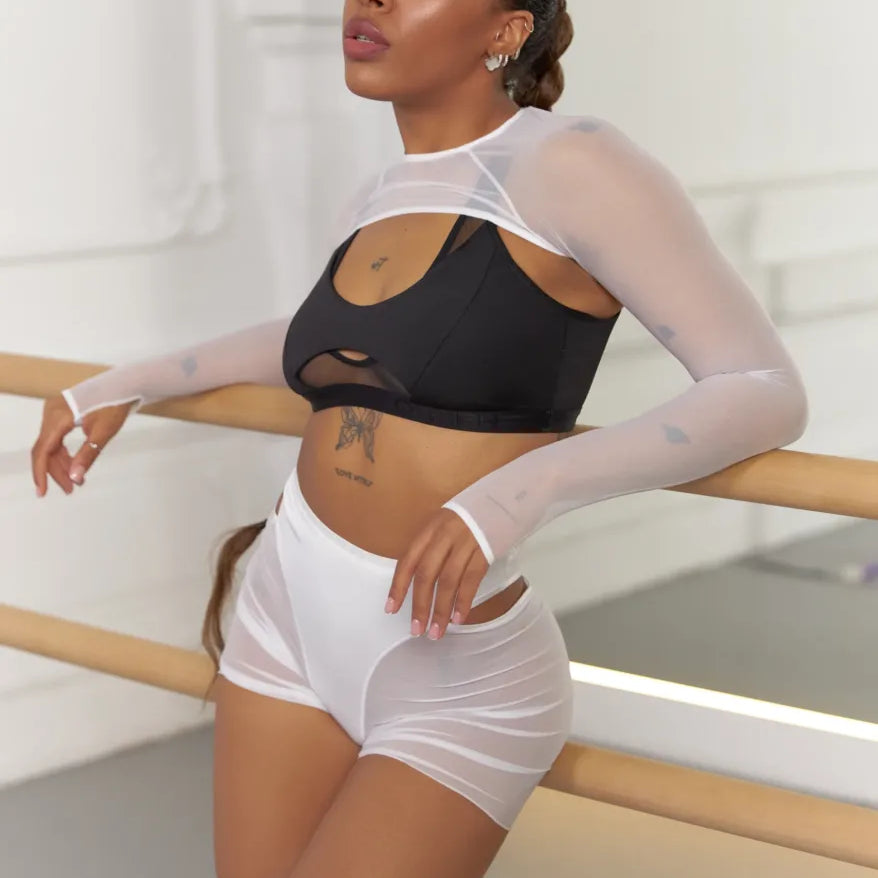
What to wear for static pole training: Clean, functional polewear that maximizes skin contact. High leg cut shorts, fitted top, and nothing that interferes with direct pole contact. The Alpha Botanica Hot Pants ($52) are a great static training bottom - short enough for full inner thigh contact, excellent construction.

What Training on a Spinning Pole Develops
Flow and Visual Drama
The first time most dancers try a spinning pole, the reaction is almost universal: oh. Oh. This is different.
Spinning pole takes moves that look crisp and athletic on static and makes them look fluid, sweeping, and cinematic. The continuous rotation means transitions between positions flow together in a way that reads as dance rather than exercise. Sequences that require significant intentionality on static become expressive and effortless-looking on spinning.
For flow-based, artistic, and choreography-focused training, spinning pole changes what's possible visually and kinesthetically.
Centrifugal Management
Here's the thing spinning pole actually teaches: managing the forces that spinning creates. As rotation speed increases, centrifugal force pulls your limbs outward. Controlling your shape against that pull - keeping a tight tuck when you want one, extending dramatically when you want that is a specific skill spinning pole develops.
Dancers who train heavily on spinning pole develop an intuitive feel for how much force is available and how to use it intentionally.
Accessibility for Certain Moves
Some moves are genuinely more accessible to learn on a spinning pole because the continuous rotation provides mechanical assist. The ballerina spin, the hip hold carousel, and various layback combinations are examples - the rotation helps generate and maintain the position in ways that static makes significantly harder.
Many instructors introduce specific moves on spinning first, then transfer them to static once the student understands the shape.
Competition: Spinning Category
In pole sport competition, the spinning category allows and expects the full use of the pole's rotation. Competitors are judged on how well they use the spinning pole's properties - maintaining controlled speed, using momentum intentionally, managing shape changes through rotation. It rewards a different skill set than static.
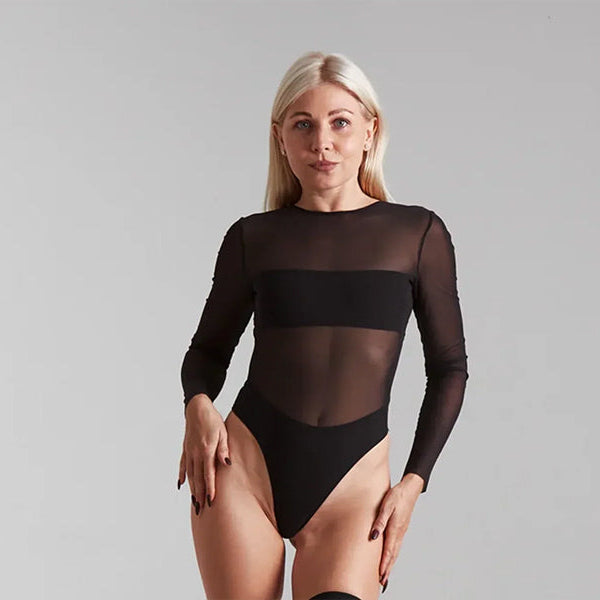
What to wear for spinning pole training: Fitted clothing is even more critical on a spinning pole. Loose fabric behaves unpredictably during continuous rotation - it can fly out, wrap, or interfere with controlled deceleration. Tight, secure polewear is non-negotiable. Our Bodysuits collection works particularly well for spinning - nothing can shift or separate.
The Honest Question: Which Should Beginners Start With?
Start on static. Almost universally recommended, for good reasons:
Spinning poles can be disorienting when you're first learning to orient yourself on the pole at all. The additional motion makes it harder to understand what your body is doing, which slows skill acquisition and can feel unsafe during early invert attempts.
Static pole forces you to develop the foundational body awareness and strength that will serve you for your entire pole career. Everything you learn on static transfers to spinning. Not everything learned on spinning transfers back cleanly to static.
When to introduce spinning: After you can execute your core beginner moves - basic spins, beginner climbs, a first invert with reasonable consistency on static. Most dancers are ready to explore spinning somewhere between months 2 and 4 of training. Some earlier, some later.
The transition to spinning is usually joyful - you suddenly see the full expressive potential of moves you've been working on in their functional, technical form.
Training on Both: The Strategic Approach
Experienced pole dancers typically maintain practice on both static and spinning, using each strategically:
Static sessions for: Strength work, technique refinement, conditioning, drilling complex moves where you need honest feedback on your positioning, static competition preparation.
Spinning sessions for: Flow work, choreography development, exploring move combinations, working on sequences that specifically use spinning pole's momentum properties, artistic and performance development.
A single training session might move between modes - static for the climb drills and invert conditioning at the start, spinning for the choreography run-through at the end.
How Your Pole Type Affects Grip and Clothing
The pole you're on actually does influence your clothing and grip choices in small but real ways.
On static: Grip is entirely skin-generated. You need maximum skin contact at all your grip zones. The case for shorter shorts, more skin exposure, and grip-focused clothing decisions is strongest on static.
On spinning: The centrifugal force works in your favor for some holds (pushing your skin into the pole slightly) but against you for others (pulling your body away from the pole). Well-fitted clothing that stays exactly where it's placed is especially important - anything loose becomes unpredictable under rotation.
On both: Lotion is still your enemy. Clean, dry skin on a clean pole is the baseline for effective grip on any mode.
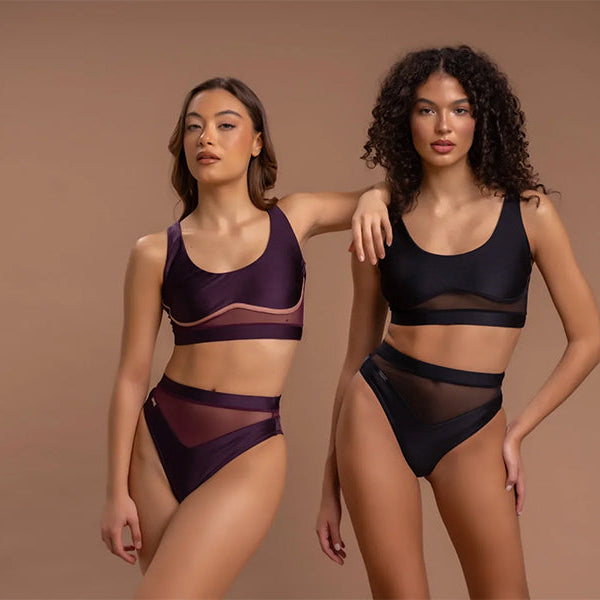
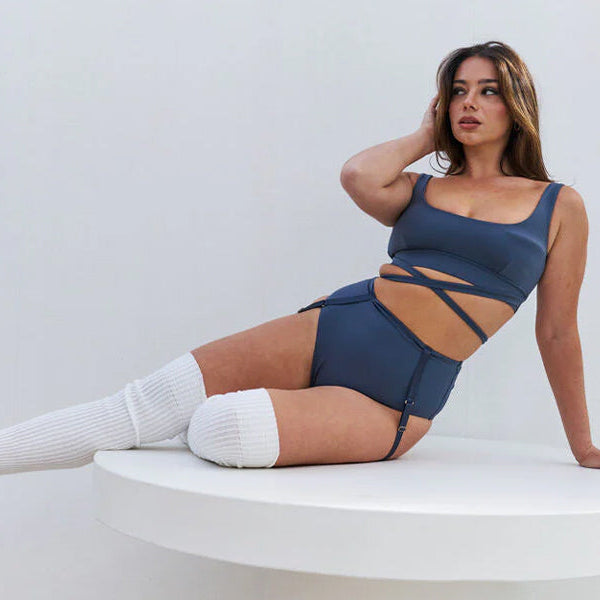
For training polewear that works across both static and spinning, browse our Bottoms and Tops collections - everything chosen for real training demands, shipped from the US with no tariffs and easy returns.
The Bottom Line
Static and spinning poles are not competing options - they're complementary training tools that develop different skills and serve different purposes. A complete pole dancer trains on both and understands what each one is for.
Start on static. Build your foundations. When your technique is consistent and your body awareness is developed, introduce spinning and discover what your moves look like when the pole is working with you.
Shop training polewear for every mode at thepoleedit.com/collections/all. US-based, founded by a pole dancer, ships fast with easy returns.

