

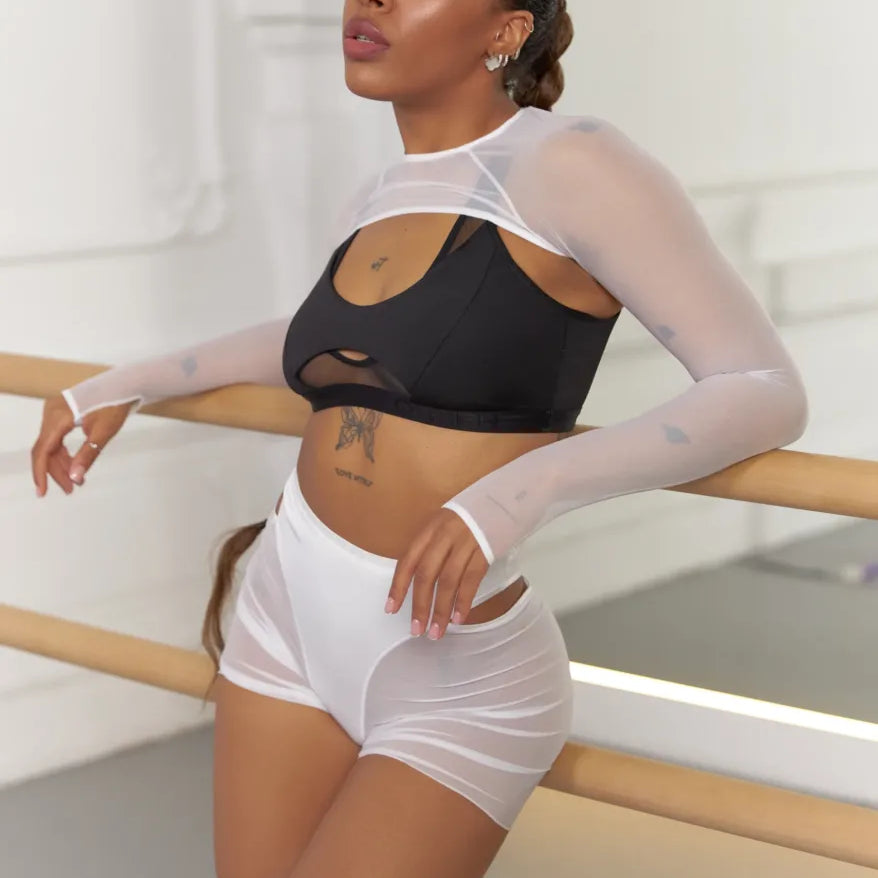
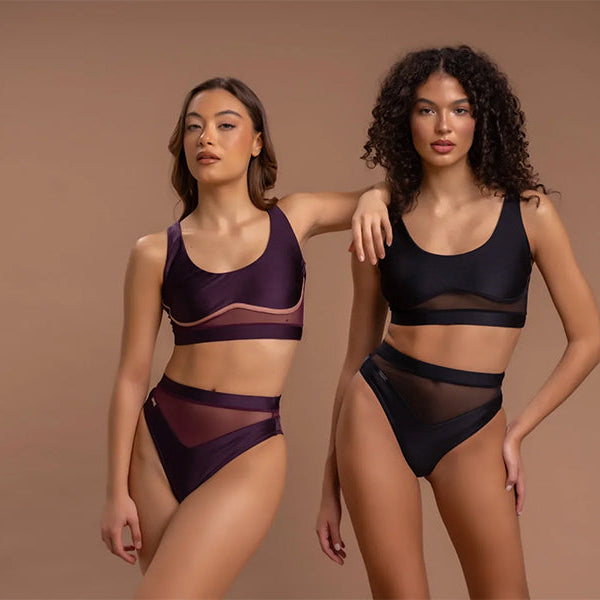
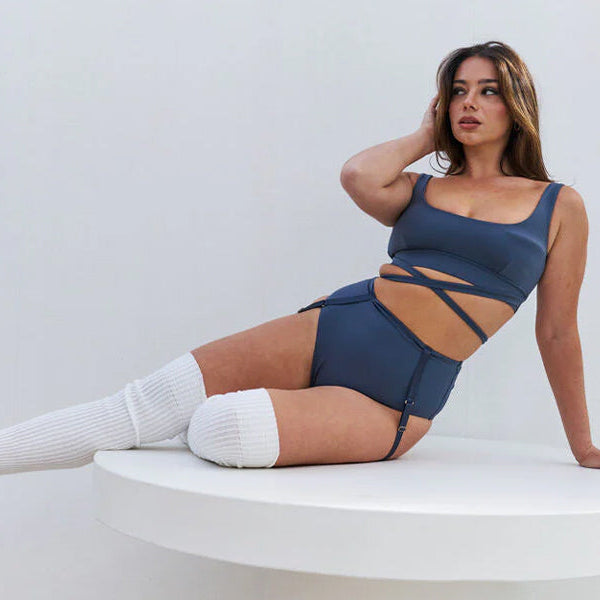
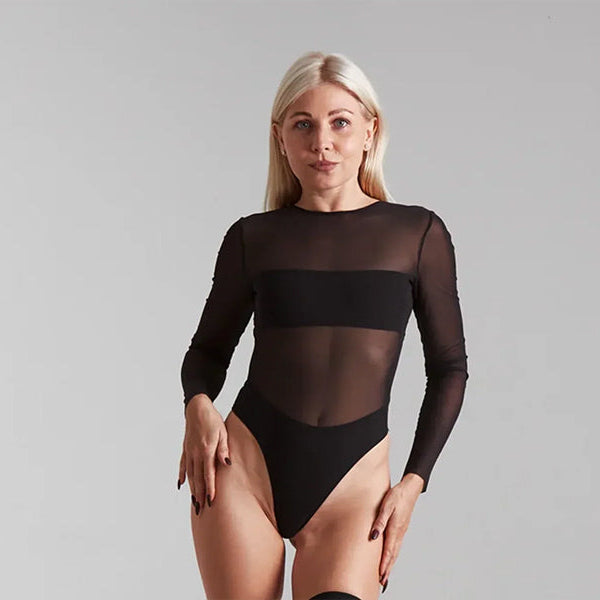

You're looking at two pairs of pole dance shorts. One is $12 from an online marketplace. One is $52 from a dedicated polewear brand. Both are black. Both are "high waisted." Both claim to be stretchy and comfortable.
Is the $52 pair really worth four times the money?
This is a genuine question and it deserves a genuine answer not brand marketing, not dismissiveness, but an honest breakdown of what actually differs between quality activewear and cheap alternatives. Understanding this difference changes how you shop for polewear and how you think about the clothing your training depends on.
The Visible Differences (What You See Immediately)
The differences between quality activewear and fast fashion sometimes show up immediately, before you've worn either piece.
Construction precision: Turn a garment inside out and examine the seams. Quality activewear uses flatlock seaming - the stitch lies flat against the fabric with a consistent stitch count across the entire seam length. Fast fashion often uses overlocked seams with inconsistent tension and visible skipped stitches. This isn't aesthetic; it's structural. Inconsistent seams fail faster under load.
Waistband construction: Fold the waistband back and look at the interior. Quality waistbands have consistent elastic integration, often a separate layer of structured elastic within the band that prevents rolling and maintains shape. Cheap waistbands use minimal elastic attached with basic stitching that begins rolling within weeks of use.
Fabric surface: Run your hand across the fabric. Quality nylon-spandex has a smooth, silk-like surface that feels consistent across the entire garment. Cheaper polyester-dominant fabrics often have a slightly rougher, duller surface, and you may feel small surface irregularities in the weave.
Edge finishing: Check the leg openings and any cutout edges. Quality pieces use finished, stable edges that maintain their shape. Cheaper alternatives often use raw or minimally finished edges that begin to roll or fray after washing.
The Invisible Differences (What You Discover in Use)
The most significant quality differences often don't show up until you've worn a piece.
Elastic Recovery
This is the single most important performance difference between quality and cheap activewear, and you can't see it until after several hours of wear.
What happens with quality elastic recovery: You put on your shorts, train, sit, move through your whole day. At the end of the day, the shorts look and fit exactly as they did at the beginning. The waistband is in the same position. The seat isn't bagging. The leg openings haven't stretched out.
What happens with poor elastic recovery: The waistband begins stretching within a session. After a few weeks, it no longer sits where it's supposed to. The seat bags after a few hours of wear. Within a season, the piece has permanently deformed from its original shape.
The elastic component of stretch fabric - spandex determines recovery. Premium spandex (particularly Lycra-brand) maintains recovery through thousands of stretch and release cycles. Generic spandex degrades faster. Cheap shorts often use a minimal spandex percentage with low-quality fiber that shows permanent deformation within months.
Abrasion Resistance at Contact Points
In pole training specifically, the fabric at your inner thigh, forearms, and any pole-contact zone experiences repeated friction. Quality nylon-spandex resists this friction significantly better than cheaper alternatives.
What this looks like in practice: On cheap shorts, the inner thigh area shows visible fabric thinning and surface pilling within weeks of regular training. The same zone on quality nylon-spandex holds up through months or years of the same training.
This isn't minor - a pair of cheap shorts that develops thin, transparent inner thigh areas after six weeks has failed as a pole training garment. You can't train safely in transparent fabric.
Colorfastness
Quality activewear maintains its color through repeated washing. Cheap alternatives often fade significantly after 5–10 washes, particularly deep colours and black (which often takes on a greenish or brown cast as the dye fades).
Quality dye processes use superior dye chemistry and mordants that bond more completely to the fiber. The result is color that remains consistent for years rather than seasons.
The Numbers: Why Fast Fashion Is Often More Expensive
This seems counterintuitive, but it's arithmetically demonstrable.
Cheap shorts scenario:
-
Cost: $12
-
Lifespan with regular pole training: 2-3 months before visible degradation
-
Training sessions in that period: ~24-36 sessions (3x/week for 2-3 months)
-
Cost per session: $0.33-$0.50
Quality polewear scenario:
-
Cost: $52
-
Lifespan with regular pole training: 24-36 months (2-3 years) with proper care
-
Training sessions in that period: ~288-432 sessions (3x/week for 2-3 years)
-
Cost per session: $0.12–$0.18
The quality pair costs more than twice as much per session as the cheap pair wait, no. The cheap pair costs 2-4x more per session than the quality pair. You're paying less per training session by paying more per garment.
Additionally: the cheap pair costs $12 but you've bought 8-12 pairs over the same 2-3 year period that one quality pair covers. Your actual spend is $96–$144 in cheap alternatives vs $52 in quality polewear. The math is unambiguous.

What High-Quality Activewear Brands Actually Do Differently
The premium you pay for brands like Lunalae, Rolling Brand, Harna, Paradise Chick, and Nona Perkasa goes to:
Better raw materials: Premium nylon fiber grades, Lycra-brand spandex, dye processes that cost more but produce better results. You can't see the fiber grade on the label, but you feel it immediately.
Better manufacturing tolerances: Tighter quality control on stitch counts, seam tension, and dimensional accuracy. This costs more in production but produces pieces that fit consistently and last.
Genuine pole-specific design: These brands are designed by people who pole dance or who work closely with pole dancers. The waistband height, leg opening placement, and fabric weight aren't arbitrary - they reflect real training requirements. Cheap alternatives copy the aesthetic without the functional understanding.
Real sizing development: Size grading on quality brands is developed through fitting with real bodies at multiple sizes. Cheap brands often just scale up/down from a single sample which produces fits that become worse as you move away from the sample size.
When Cheap Activewear Is Fine And When It Isn't
Being honest: there are situations where cheap activewear is acceptable.
Acceptable: Very occasional use (once or twice a month), warm-up layers that come off before pole work, beach cover-ups, casual light exercise.
Not acceptable for pole training: Your main training shorts and tops that contact the pole regularly. The abrasion, stretching, and repeated washing of real pole training will degrade cheap fabrics too quickly to be practical.
The community consensus: invest in 2–3 quality training pieces that you rotate and care for properly. These outlast dozens of cheap alternatives and perform better throughout their lifespan.
Shop Quality Polewear at The Pole Edit
Every brand in our store was chosen because the quality is genuinely there, the fabrics, the construction, and the fit meet real training standards. All shipped domestically from within the US with no tariff surprises and easy returns.
Browse Lunalae, Rolling Brand, Harna, and more at thepoleedit.com/collections/all. Buy fewer, better pieces. Train on clothing that holds up.

